


Event Security
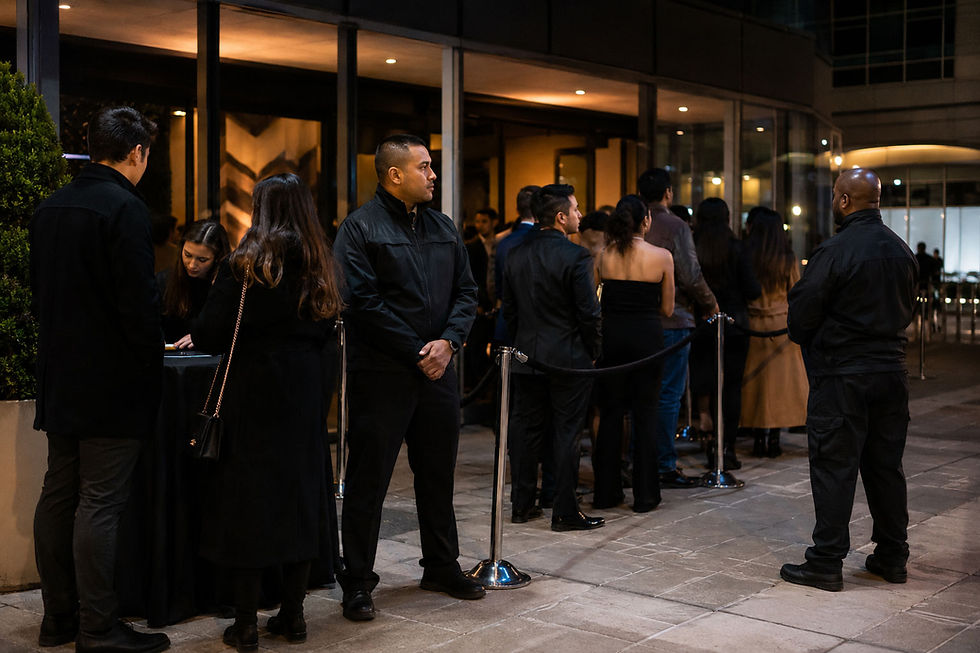
Event Security: What Organizers Should Plan Before Guests Arrive
Event security should not be an afterthought.
By the time guests arrive, the plan should already be clear. Who is watching the entrance? Who handles a guest who refuses to leave? Who monitors restricted areas? Who helps staff if a situation gets tense? Who contacts emergency services if needed?
These are not questions to figure out during the event.
For public events, private functions, corporate gatherings, community events, and venue-based events in Toronto and the GTA, trained security guards help keep the event organized, controlled, and safer for everyone on-site.
Start With the Type of Event
Not every event needs the same security setup.
A corporate reception is different from a public festival. A private party is different from a ticketed venue event. A community fundraiser is different from a large outdoor gathering.
The first step is to look at the event type, expected attendance, location, hours, access points, alcohol service, parking, public visibility, and whether guests need to be screened or checked in.
Security should match the event, not a generic package.
A small event may only need entrance support. A larger event may need multiple guards across several areas.
Entrances Need Clear Control
Most event security problems start at the entrance.
Guests may arrive without tickets. People may try to enter restricted areas. A crowd may form near the door. Contractors, performers, staff, volunteers, and vendors may all need different levels of access.
If the entrance is not controlled, the rest of the event becomes harder to manage.
Security guards can help check access, direct guests, support ticket or guest-list procedures, and keep entry points from becoming crowded or confusing.
A clear entrance process makes the event feel more organized from the start.
Crowd Flow Matters More Than People Think
Crowd flow affects how safe and comfortable an event feels.
If guests bottleneck near doors, bars, washrooms, elevators, stairs, or exits, small frustrations can grow quickly. People may push through tight spaces, block access, or create confusion for staff and guests.
Security guards can help observe where people are gathering and support better movement through the space.
This does not mean guards need to control every step. It means trained people are watching for areas where crowding, conflict, or confusion may develop.
Good event security keeps people moving without making the event feel tense.
Staff Should Not Handle Every Issue Alone
Event staff are usually focused on service.
They may be checking tickets, serving food, managing guests, coordinating vendors, cleaning, handling schedules, or supporting the organizer. They should not be expected to manage every difficult situation by themselves.
Security guards give staff someone to call when a situation moves beyond normal service.
This may include an aggressive guest, a person refusing to leave, someone entering a restricted area, a parking issue, a dispute, or a concern near the entrance.
That support helps staff stay focused on their job while security handles the issue calmly.
Restricted Areas Need Attention
Most events have areas guests should not enter.
This may include staff rooms, storage areas, backstage spaces, kitchens, equipment areas, offices, loading zones, alcohol storage, cash handling areas, or private rooms.
Guests may enter these areas by mistake. Others may try to enter because they are curious, disruptive, or looking for something.
Security guards can help watch restricted areas and redirect people before the situation becomes a problem.
For events in commercial buildings, venues, hotels, plazas, community spaces, or outdoor areas, this can make a major difference.
Alcohol Can Change the Security Need
Events with alcohol often need more planning.
Not every alcohol-related issue becomes serious, but behaviour can change as the event goes on. Guests may become louder, less patient, more emotional, or harder for staff to manage.
Security guards can help watch for early signs of trouble.
They can support staff, respond to disputes, help remove guests when needed, and work with the event organizer or venue team. The goal is not to make the event feel heavy-handed. The goal is to have trained support ready if someone crosses the line.
If alcohol is being served, security should be discussed early.
Parking and Exterior Areas Still Matter
The event does not only happen inside the room.
Guests may arrive in parking lots, line up outside, wait near entrances, smoke near doors, use side areas, or gather after the event ends. These exterior spaces can affect the whole event experience.
Security guards can help monitor parking areas, entrance lines, exterior walkways, loading areas, and guest movement before and after the event.
This is especially important for evening events, public-facing venues, and events with high attendance.
A safe-feeling arrival and exit can shape how guests remember the event.
Emergency Response Should Be Planned Beforehand
Event organizers do not need to expect the worst, but they do need a plan.
Security guards should know who the main contact is, where exits are located, where restricted areas are, how to reach emergency services, and what steps to take if something serious happens.
That planning helps avoid confusion.
If there is a medical issue, guest dispute, evacuation concern, fire alarm, or police matter, security can support the response and help keep people calm.
The time to build that plan is before the first guest walks in.
Security Should Fit the Event Tone
Good event security should not feel aggressive.
For many events, guards need to be visible, calm, and professional without making guests uncomfortable. They should understand that a corporate event, wedding, fundraiser, community event, and public festival all have a different tone.
The right guard knows how to stand back when things are fine and step in when needed.
That balance matters.
Security should support the event, not take attention away from it.
Plan Security Before the Event Gets Busy
Event security works best when it is planned early.
Once guests arrive, it is harder to fix unclear entrances, weak access control, crowding, or staffing gaps. A proper plan helps everyone understand where guards should be, what they should watch, and who they should contact.
Lima Security Services provides event security, commercial security, mobile patrol security, and corporate security support across Toronto and the GTA.
If your event has public access, guest lists, alcohol service, restricted areas, large attendance, or staff safety concerns, security should be part of the plan before the doors open.