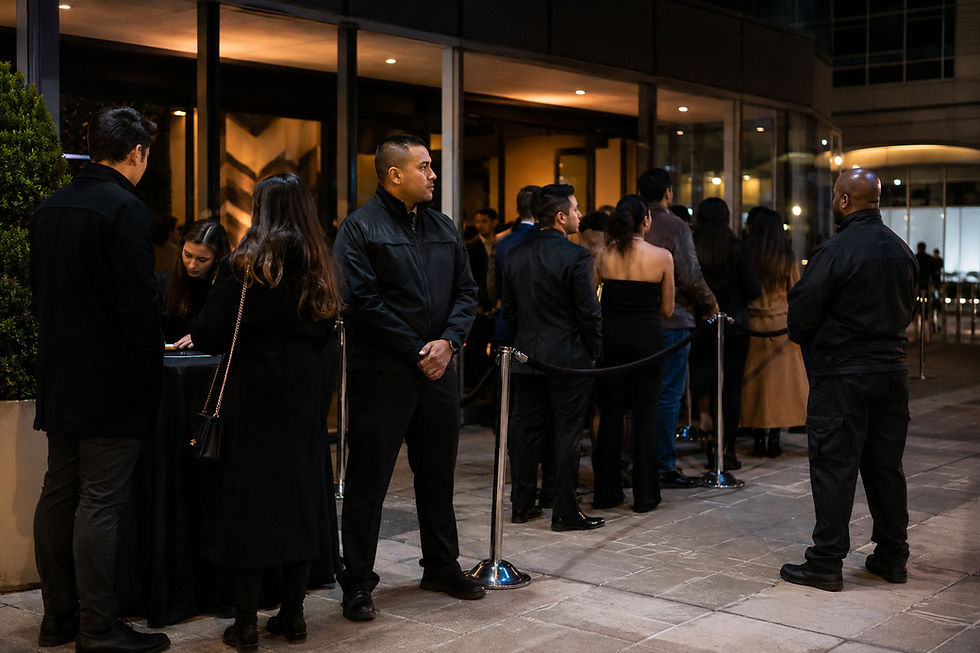
Access Control for VIP and Restricted Areas at Corporate Events

Corporate events may include executives, speakers, performers, sponsors, employees, vendors, media and invited guests. They may all be attending the same event, but they do not necessarily require access to the same areas.
A guest invited to the reception may not be permitted backstage. A vendor may need access to a service corridor but not the VIP lounge. A photographer may have access during part of the event but not during a private meeting.
Without a clear access plan, security personnel can be left making decisions at the door while guests, staff and event organizers wait.
Direct answer: Access control for VIP and restricted areas should define each event zone, identify who can enter, assign recognizable credentials, place guards at the correct access points and establish who can approve an exception. The plan should also address lost passes, borrowed credentials, refused access and emergency movement.
Which Areas Need Restricted Access?
The first step is to map the event and identify spaces that should not be open to every attendee.
Restricted areas may include:
VIP lounges
Speaker or performer holding rooms
Green rooms and backstage corridors
Executive meeting rooms
Production and control areas
Registration offices
Staff break areas
Catering preparation spaces
Alcohol and inventory storage
Coat-check storage
Equipment rooms
Loading and delivery entrances
Cash-handling areas
Sponsor or media rooms
Hotel guest-room floors
Parking and vehicle staging areas
Each area should have a reason for being restricted. Applying unnecessary controls to every doorway can confuse guests and require more staff than the event needs.
The event organizer, venue and security provider should agree on the restricted zones before setup begins.
Who Should Have Access to Each Zone?
A single guest list may not provide enough information for a complex event.
The access plan should divide attendees into clear groups, such as:
General guests
VIP guests
Executives
Speakers or performers
Event employees
Venue employees
Security personnel
Caterers
Technical crews
Photographers and media
Sponsors
Contractors
Delivery drivers
Access permissions should reflect what each person needs to do.
A caterer may require access to the service entrance, kitchen and event floor. They likely do not need access to the executive meeting room. A speaker may require stage and green-room access but not the production booth.
Permissions should also consider time. A delivery crew may have access during setup but not while guests are present.
What Makes a Credential System Effective?
Credentials need to be easy for guards to recognize without requiring a long conversation at every checkpoint.
Depending on the event, credentials may include:
Printed badges
Coloured wristbands
Lanyards
Staff uniforms
Temporary access cards
Digital passes
Vehicle permits
Vendor identification
Escort-only access
Colours, letters or symbols can identify different access levels. The system should remain simple enough that guards can recognize permissions quickly.
Too many credential types create mistakes. If several badges look almost identical, a guard may need to stop people repeatedly or may allow someone into the wrong area.
Credentials should be:
Clearly different from one another
Difficult to alter or copy
Assigned to an individual when appropriate
Valid only for the required areas
Valid only during the required times
Collected or deactivated when no longer needed
The credential should support the guest list, not replace it completely. A badge can be lost, borrowed or passed to another person.
How Should Guest Lists Be Managed?
The organizer should provide the final guest and access lists before the event begins.
The list should identify:
Guest name
Organization or affiliation
Access level
Expected arrival time
Host or internal contact
Whether a guest may bring another person
Any approved vehicle or parking access
Whether an escort is required
Last-minute changes are common. The plan needs one authorized person who can approve additions, not several people giving different instructions to guards.
The check-in team and security personnel should know:
Who can add a name
How the addition is recorded
Whether identification must be confirmed
What happens when a guest arrives with someone not listed
Who resolves spelling or registration errors
How duplicate names are handled
When an event organizer must attend the entrance
Guest lists should be handled carefully. They should not be left where visitors can read names, contact details or access levels.
Does a VIP Entrance Need Different Procedures?
A separate VIP entrance can provide privacy and reduce delays at the main guest entrance.
However, it still needs controlled access.
The VIP entrance procedure should cover:
Which guests use the entrance
How vehicles approach and depart
Where drivers wait
Who confirms the guest’s identity
Whether accompanying people are approved
Where media may stand
Whether the guest receives an escort
How personal assistants or security personnel are handled
Which route leads to the VIP area
What happens when an unexpected guest arrives
The entrance should feel organized rather than overly restrictive. A professional greeting and quick confirmation can protect access without creating an uncomfortable scene.
Security guards should not draw unnecessary attention to the arrival. Their role is to confirm access, watch the surrounding area and direct the guest according to the plan.
How Should Staff and Vendors Enter?
Staff and vendor access is often less controlled than guest access because these entrances are active during setup.
Caterers, decorators, audiovisual technicians, rental suppliers and venue employees may arrive at different times. Loading doors may remain open while equipment is moved.
The event plan should establish:
One designated staff or vendor entrance
Scheduled arrival periods
A contractor or vendor list
Identification or work-order requirements
Where vehicles can unload
Who can authorize an unexpected delivery
Which areas each vendor can enter
Whether credentials must be displayed
Who confirms that workers have left
When loading doors are secured
A vendor should not be permitted to move through guest or VIP areas simply because they are working at the event.
Temporary credentials should be returned or cancelled when the work is complete.
Where Should Security Guards Be Positioned?
Guard placement should follow the restricted areas, not only the main entrance.
Potential posts may include:
Main guest entrance
VIP entrance
Backstage access
Executive meeting area
Staff and vendor entrance
Loading area
Registration desk
Parking or vehicle arrival point
Access-controlled elevator
Corridor leading to restricted rooms
Some locations may only need coverage during part of the event. The loading entrance may require a guard during setup and teardown, while backstage access may need coverage from rehearsal until the final participant leaves.
The security plan should identify when each post becomes active and who authorizes it to close.
Lima Security Services provides event security services for corporate functions, private events, concerts and public gatherings across Toronto and the GTA.
How Should Guards Verify Access?
The verification process should be consistent at each checkpoint.
A guard may need to:
Greet the person.
Check the displayed credential.
Compare it with the required access level.
Confirm the person’s name when necessary.
Check the guest or staff list.
Contact the authorized event representative if information does not match.
Record an approved exception.
Direct the person to the correct area.
Familiarity should not replace the process. Someone who appears to know the venue or recognizes an event employee may still need to show the required credential.
The guard should avoid making exceptions based on confidence, appearance or the person’s claim that they are important.
What Happens When Someone Is Not on the List?
A person missing from the list may be an invited guest whose registration was overlooked. They may also be attempting to enter without authorization.
The guard should not immediately accuse the person of dishonesty. A calm response can prevent an administrative error from becoming a public argument.
The guard can:
Confirm the spelling of the name
Check whether the person is listed under an organization
Ask who invited them
Contact the designated event representative
Move the person away from the active entrance
Explain that access cannot be granted until authorization is confirmed
The event representative, not the guard, should decide whether an unlisted guest is added.
If access is not approved, the guard should clearly explain that the person cannot enter and direct them away from the checkpoint.
How Should Lost or Borrowed Credentials Be Handled?
The event should have a process for lost, stolen or misplaced credentials.
The response may include:
Reporting the missing credential
Cancelling a digital pass or access card
Notifying guards at affected checkpoints
Confirming the person’s identity
Issuing a replacement with a different number or appearance
Recording who authorized the replacement
Recovering the original credential if found
A person should not be given unrestricted access simply because they previously had a valid badge.
Guards should also watch for:
A badge being passed to another person
A credential that does not match the holder
Altered colours or printed information
Photographs of digital passes
A staff credential being used outside its permitted time
Someone covering part of a badge
The response should follow the event procedure. Guards should not invent new credential rules once the event is underway.
What If Someone Refuses to Accept Denied Access?
Denied access can become sensitive when the person believes they should be admitted.
They may be a senior employee, a guest of a sponsor or someone who attended a previous event without restrictions.
The guard should remain respectful but should not allow pressure or status claims to override the access plan.
A practical response includes:
Restating the required access level
Explaining that the guard cannot approve exceptions
Contacting the authorized organizer
Asking the person to wait away from the checkpoint
Keeping the entrance clear for approved guests
Requesting a supervisor if the person becomes confrontational
Documenting threats or repeated attempts to enter
If the person attempts to push past the checkpoint, threatens staff or creates an immediate danger, the event’s escalation and emergency procedures should be followed.
Why Does Setup and Teardown Need Security?
Restricted-area concerns begin before guests arrive and continue after they leave.
During setup, doors may be open and equipment may be unattended. Vendors may not yet have credentials, and event staff may be focused on schedules rather than access control.
During teardown, guests may still be on-site while valuable equipment, alcohol, décor and event materials are being removed.
Security coverage may be needed to:
Monitor loading entrances
Confirm delivery and pickup companies
Protect stored credentials and guest lists
Keep guests away from dismantled equipment
Verify people removing event property
Secure rooms as they are cleared
Confirm that temporary workers have left
Watch parking and vehicle staging areas
Record damaged or missing property
The existing article Event Security: What Organizers Should Plan Before Guests Arrive provides a broader look at entrances, guest flow, crowd behaviour and staffing.
How Should Security Communicate During the Event?
Guards need a direct way to reach the person authorized to make access decisions.
The communication plan should identify:
Security supervisor
Event organizer
Venue manager
Registration lead
VIP contact
Production manager
Medical contact
Emergency-services contact
Radio channels or contact groups should be assigned before guests arrive. Sensitive guest information should not be announced over an open channel unless necessary.
Guards should use consistent language for:
Requesting an access decision
Reporting a missing credential
Advising that someone has been denied entry
Requesting a supervisor
Reporting an unattended item
Summoning emergency assistance
Clear communication keeps separate checkpoints from applying different rules.
How Should Emergency Access Be Protected?
Restricted areas must remain accessible to emergency responders.
Security controls should never block required exits or prevent people from leaving during an emergency.
The plan should establish:
Emergency entry routes
Who meets police, fire or paramedics
How secured elevators or doors are released
Which corridors must remain clear
Where guests move during an evacuation
How VIPs and other attendees rejoin the main emergency process
Who confirms that restricted rooms have been cleared
VIP status should not create a separate emergency procedure that conflicts with the venue’s established evacuation plan.
Security personnel should know when routine access restrictions must give way to emergency response.
What Should Be Documented?
Access concerns should be recorded when they may require follow-up.
Reports may involve:
An unlisted guest
A denied entry
A lost credential
A person using someone else’s pass
Repeated attempts to enter a restricted area
A vendor arriving outside the approved time
A forced or propped-open door
A threat toward registration or security personnel
Property damage
Police or medical assistance
A guest removal
The report should include the time, location, people involved, observed behaviour, access decision, person who approved the response and any follow-up required.
For additional guidance, see Why Security Incident Reports Matter More Than Most Property Managers Realize.
Corporate Events Held at the Workplace
Some corporate events take place inside the company’s office rather than at a separate venue.
Employees may invite guests into a building that normally uses access cards, reception procedures and restricted floors. Event credentials should work with the existing building-security plan.
Organizers should determine:
Which office entrances remain open
Whether regular employee cards still work
Which floors guests may access
How private offices and records areas are secured
Whether employees may bring additional guests
Who controls elevators
How cleaning and catering vendors enter
When the building returns to normal access
Lima also provides corporate security services for workplaces requiring entrance monitoring, patrols and access-point security.
Restricted-Area Planning Checklist
Before the event, organizers should ask:
Have all restricted areas been mapped?
Does every restricted area have a clear purpose?
Are access levels easy to understand?
Can guards recognize credentials quickly?
Is there one final guest and vendor list?
Who can approve a last-minute addition?
Are VIP, vendor and general guest entrances separated where needed?
Are setup and teardown periods covered?
What happens when a credential is lost?
Can temporary access cards be cancelled?
Do guards know how to contact the event organizer?
Are emergency routes kept clear?
Are denied access and other incidents documented?
Does the plan account for parking, elevators and loading areas?
A clear answer to each question reduces last-minute decisions at the entrance.
Keep Access Decisions Away From the Door
A guard should not have to negotiate event policy while a line forms behind an unlisted guest.
The organizer should decide the access levels, credentials, restricted areas and exception process before the event begins. Security personnel can then apply those decisions consistently and direct unresolved questions to the correct person.
This protects VIP areas, staff spaces, equipment and private meetings without making the event feel unnecessarily controlled.
Contact Lima Security Services to discuss event security coverage for a corporate function in Toronto or the GTA.
Frequently Asked Questions
What credentials work best for restricted event areas?
The best credential depends on the event. Badges, wristbands, lanyards, digital passes and access cards can all work when the access levels are easy for guards to recognize and difficult to alter.
How many guards are needed for restricted areas?
The number depends on the venue layout, number of entrances, guest count, restricted zones, event schedule and whether setup and teardown require coverage.
Can a security guard add someone to the guest list?
The guard should not approve an addition unless that authority has been assigned in the event plan. An authorized organizer should make and record the decision.
What should happen when a guest loses a VIP pass?
The missing credential should be reported and cancelled when possible. The guest’s identity and access level should be confirmed before a replacement is issued.
Should denied access be documented?
A simple administrative mistake may not require a formal report. Threats, repeated entry attempts, borrowed credentials and other security concerns should be documented for the organizer.